
Cart (0)
Free delivery from 150€ 🔥
Your cart is empty

Getting started with pole dance: the art that combines strength, grace and flexibility. In short, one of the most complete sports you haven't tried yet! If you're looking for a new passion, you're in the right place. We give you all the tips to learn pole dance as a beginner!
It's a creative, artistic and athletic discipline that combines dance and acrobatics around a pole dance bar, in a spirit of community.
No need for years of athletic experience: many pole dance studios offer classes adapted to your level, and trust us, you're going to surprise yourself!
Contrary to popular belief, pole dance isn't reserved for professional performers. It's an activity accessible to everyone, men and women alike, whatever your starting fitness level!

Pole dance is incredibly fun, but also physically demanding: working through beginner figures engages multiple muscle groups and improves your strength, endurance and flexibility.
Because it's not just about those beautiful abs! On a mental level, pole dance has many benefits: it boosts self-confidence and reduces stress. Several psychologists use it as a physical practice to help people regain confidence, learn self-love or simply let go.
Whatever type of pole class you discover, group or private, every pole dancer will tell you the same thing: it does as much good for the mind as it does for the body!
Before diving in, the question is: where do you begin? At Les Polettes, we've got you covered!
First and foremost, it's important to respect your own pace and individual rhythm to avoid injury and stay motivated.
A little heads-up: for the best possible experience, the most important thing is to follow your personal rhythm and progress. Every instructor will tell you the same!
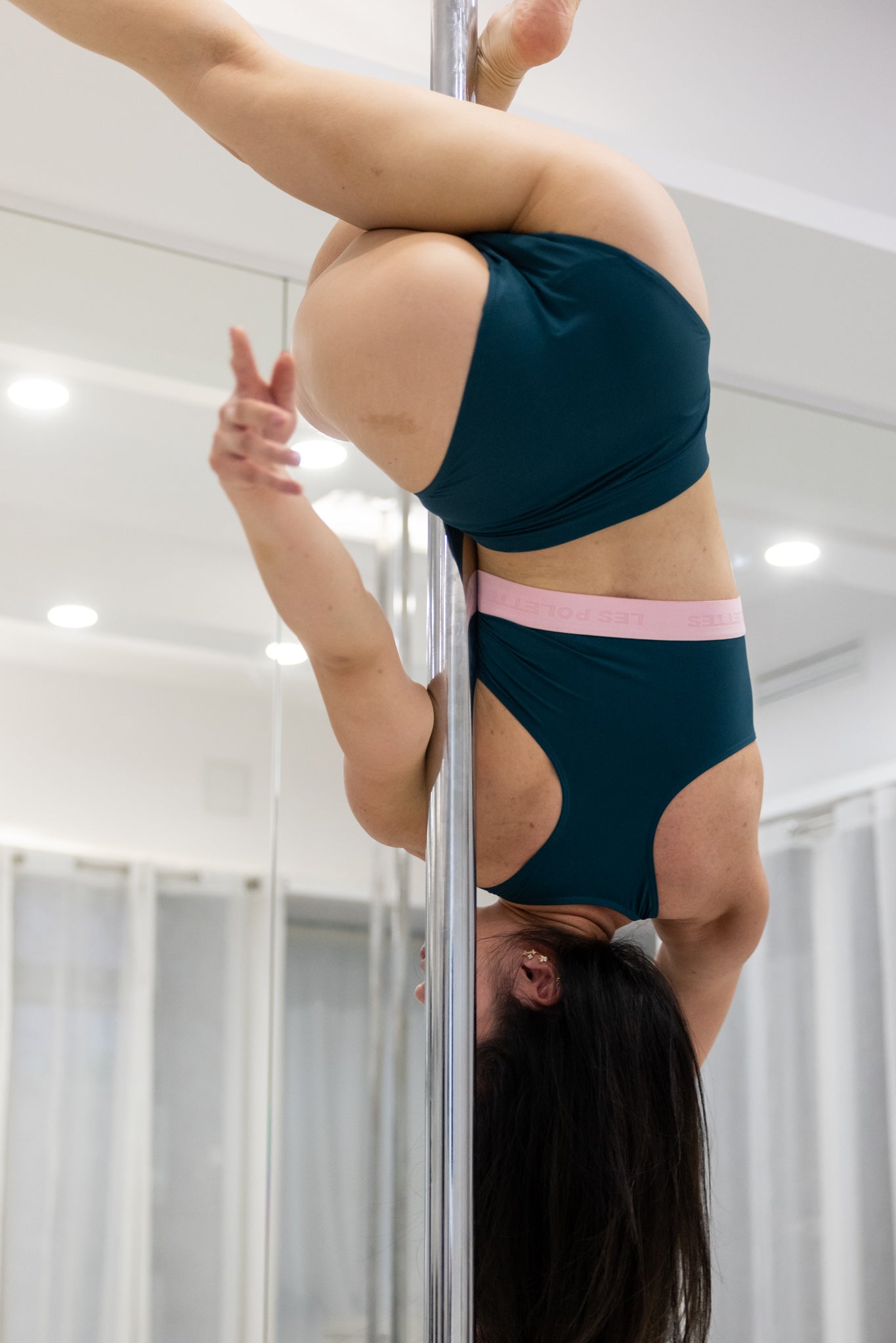
Pole dance requires a little preparation. Before stepping into your studio, know that it's better NOT to have moisturised your skin that morning!
We know, it sounds like an odd tip. But in pole, athletes use their skin to grip the bar, and if you're too slippery in your first class, you'll struggle to pull off your first basic climbs!
Bring a small cloth and some grip (if you have some). If not, don't hesitate to ask your instructor!
If you're going to a studio, you won't need to worry about a bar. But if you decide to learn pole dance at home, you'll need to install a proper pole that also works in spinning mode.
And finally, one of the joys of pole is getting dressed for it! Just make sure your outfit is right. The ideal outfit is a pole dance bra and shorts designed for pole, but if it's genuinely your very first class, a spare sports bra and shorts from your wardrobe will do. Fair warning though: you'll very quickly fall for our beautiful pole dance wear 100% made in France and incredibly comfortable!
There are plenty of studios offering beginner pole dance classes. Working with a qualified instructor ensures you learn the right techniques from the start and avoid bad habits that are hard to fix later.
You have several options: online classes to learn pole at home, but for getting started we recommend finding a pole dance school near you. More and more gyms now offer pole dance, pole sport and pole fitness classes. Group classes are always wonderfully supportive, and having an instructor significantly reduces the risk of falls or injuries, while setting you personalised goals and a teaching approach that suits you. It's ideal for building strength, creating combos and having someone supervise and guide your progress.
If you still prefer to learn at home, several online platforms exist. Check out platforms like Pole Lab, which offer plenty of tutorials to help you master the basics. These programmes are specially designed for beginners and are a great way to get started!
To prevent injuries, start every training session with a proper warm-up. Spend at least 10 to 15 minutes on light cardiovascular exercises and dynamic stretches. This prepares your muscles and joints for the demands of pole dance movements, and also helps you build strength and flexibility at the same time!
Don't neglect post-session stretching. It helps reduce muscle soreness, keeps you safe, prevents tendinitis and improves the flexibility that's essential for progressing in this discipline.
Taille correctement
La brassière Zoé est super : le maintien est bon, même pour fortes poitrines, ça ne bouge pas. Le tissu est confortable et de qualité. La couleur est magnifique ! Nickel niveau taille aussi : il suffit de suivre le guide ! Parfaite pour la pole, je vais sublimer mes combos !
Le short Zoé est top : il ne bouge pas et il est très confortable !
J’ai trop hâte de pouvoir sublimer mes combos avec l’ensemble !
Je conseille de vraiment suivre les indications du tableau des tailles !
Je le recommande vivement.
J'ai passé ma commande samedi et j'ai reçu la livraison moins de 7 jours après, en Suisse. Emballage soigné et colis en parfait état.
La culotte taille parfaitement et offre un bon maintien. Je fais un 38 avec des hanches larges et j'ai pris la taille M.
Tissu très agréable ainsi que la lanière (pas d'effet cisaillement)
J'ai passé ma commande samedi et j'ai reçu la livraison moins de 7 jours après, en Suisse. Emballage soigné et colis en parfait état.
La brassière taille parfaitement. Je fais un 80-85B et j'ai pris du M. La matière est hyper qualitative et offre un bon maintien.
Couleurs qui donnent du pep's, coupe qui correspond, agrélable à porter, hâte de tester en conditions réelles
Très confortable, conforme en therme de taille, je suis ravie de mon achat
Matière confortable, coupe ideal pour poler en confort. Paraît échancré mais il est large au niveau du maillot ce qui est super pour les figures avec écart. J'adore!
Etant un peu ronde je ne savais pas trop a quoi mattendre . Les shorts parfois ca serre trop ou ca remonte... et bien ce short est fantastique, il maintien comme il faut sans trop serrer. La couleur est sublime et il va parfaitement avec la brassiere charlie assortie. La qualité est à la hauteur du prix. Sans surprise car j'utilise déjà d'autres modèles des pipettes depuis + d'un an
J'ai 2 tenues des polettes (l'ensemble Zoé et l'ensemble Mary-Emma) et je les adore !
Guide des tailles parfait.
Cette brassiere a un tres bon maintien et confortable elle peut meme etre portee dans la vie de tous les jours .la couleur est magnifique .
Ce short a une tres joli couleur un excellent maintien et est tres agreable à porter.
Un short avec un design original. J'adore le porter pour les entraînements de pole. Le tissu est ultra agréable, comme une seconde peau. Il ne bouge jamais pendant l'entraînement, pas besoin de l'ajuster. C'est un achat qui en vaut la peine !
Une brassière avec une magnifique couleur. Le tissu est d'excellente qualité, il est doux et il suit parfaitement le mouvement. On n'a jamais besoin de l'ajuster pendant la séance de pole !
Ensemble incroyable ! De très bonne qualité !

Before you start poling, a proper warm-up is non-negotiable! According to @poledance_clem, there are 3 essential steps:
Joints
From the top of your head to the tips of your toes, whatever your level, pole asks a lot of them! Take real time to warm them up properly to avoid wear or strain.
Stretching
Depending on your training and your flexibility, prepare your body for the figures you're about to work on. Avoid strains and gently increase your suppleness in the process!
Muscle strengthening
It'll make your figures easier to execute! But remember the most important thing: the best way to avoid injury in pole dance is to listen to your body!
Some days your body will resist poling. Take the time to wake it up step by step.
Now that you're equipped and ready, let's get into the fundamentals. Always go at your own pace, step by step.
Mastering the right movements is essential for building a solid foundation. Take the time to learn and perfect each basic move, even if it feels repetitive (and train both sides!!)
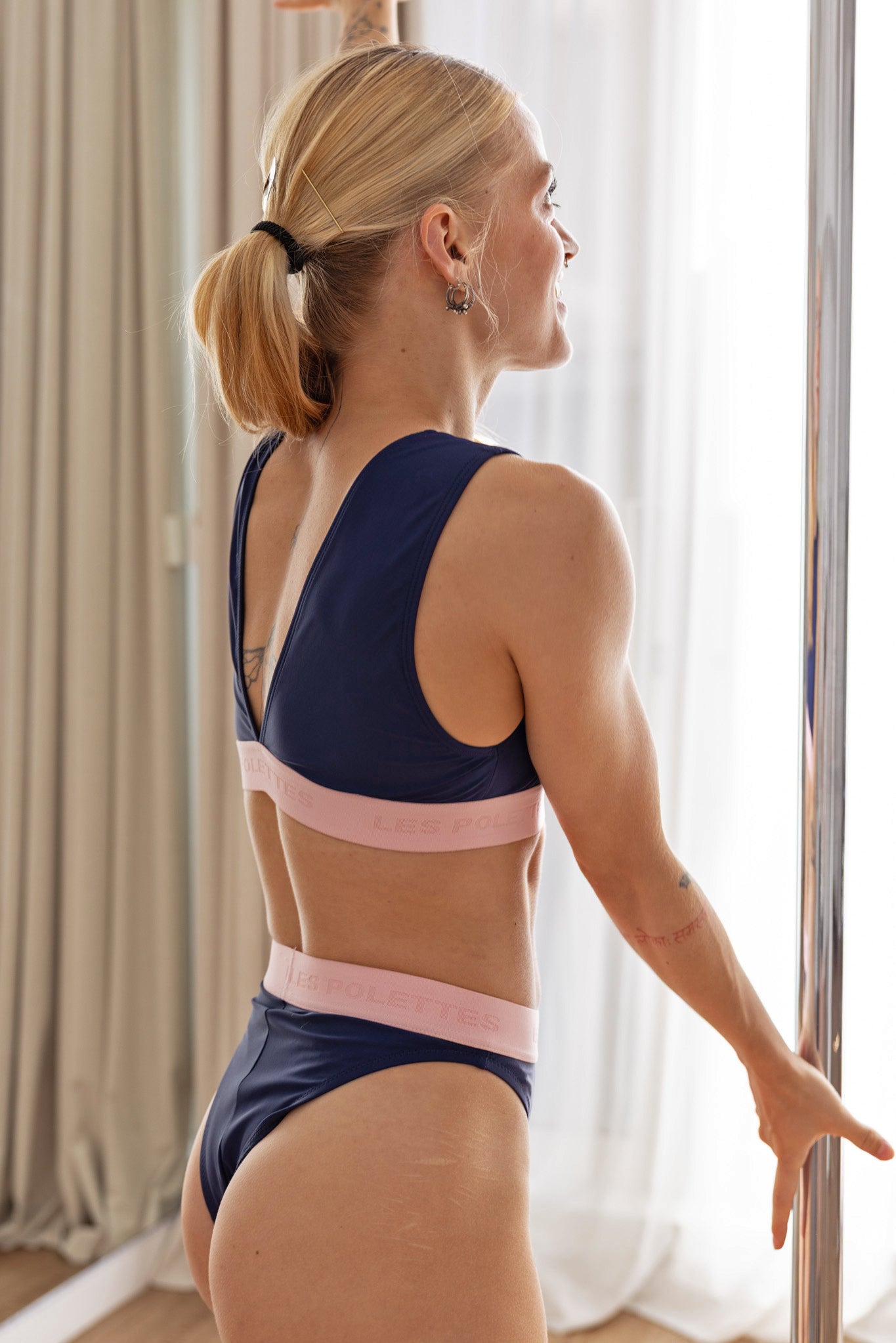
Here's a quick list of the essentials to learn when you're starting pole dance:
Don't try to rush. The key is to progress gradually by listening to your body. There's no shame in repeating movements until they feel fully embedded. Especially since if you injure yourself, it's back to square one!
Treat your instructor's feedback as invaluable tips for improvement. Progress videos can also help you visualise how far you've come and adjust your technique.


Yes, absolutely! Whatever your age, fitness level, body shape or hair colour, pole dance is accessible to everyone. Each person has their own rhythm and their own starting point.
You'll see: you'll have an easy time with some movements (yes, we promise, whoever you are) and find others really challenging. And that's completely normal. We all start somewhere and instructors are there to make sure you have fun and push past your limits!
It depends on what results you're looking for! After a year or two of regular training, you can already pull off seriously impressive combos. But from your very first classes, and this is why pole is so good for your mental health, you're going to amaze yourself!
From a physical standpoint, the first visible changes depend on the frequency and intensity of your training. Some people notice differences in muscle tone and flexibility within just a few weeks.
We think you're ready, young padawan! By following these steps and tips, you'll be well prepared to start pole dance in the best possible conditions. Never forget to listen to your body and keep having fun throughout your learning journey. Welcome to the pole family!


